Shoulder Knots That Won’t Go Away? Here’s Why
You Don’t Have to Live With That Knot in Your Shoulder. Here’s What’s Actually Happening.
You know the one.
That stubborn little knot between your neck and shoulder blade that never seems to go away.
You stretch it. You rub it. You ask someone to dig their elbow into it. Maybe you’ve even invested in a massage gun or one of those oddly shaped tools designed to reach that impossible spot on your back.
And for a little while, it feels better.
But then…
There it is again.
Same spot. Same tightness. Same nagging discomfort.
Sound familiar?
Here’s something we wish more people knew: That knot might not be what you think it is. And getting rid of the discomfort isn’t always as simple as pressing harder.
Let’s talk about what’s actually happening in those stubborn shoulder muscles—and what you can do about it.
First, Is That Really a Knot in Your Muscle?
Not exactly.
Despite what we call them, muscle knots aren’t little balls of tangled muscle fibers tied together like shoelaces.
What you’re probably feeling is a localized area of muscle tension or tenderness, sometimes associated with what’s known as a myofascial trigger point.
Trigger points are sensitive spots within muscle tissue that may feel like small, tight bands or tender nodules.
And here’s where it gets interesting…
Sometimes the spot that hurts isn’t even where the discomfort originates.
A trigger point in your upper trapezius muscle, for example, can be associated with discomfort that travels toward your neck or head.
That’s one reason rubbing the painful spot doesn’t always solve the problem.
Your muscles work together, and the area that hurts may only be part of the story.
Why Does That Same Shoulder Knot Keep Coming Back?
Let’s play a little game.
How many of these sound familiar?
- You spend hours working at a computer.
- You catch yourself holding your shoulders up toward your ears.
- You look down at your phone more often than you’d like to admit.
- You carry your purse on the same shoulder every day.
- You clench your jaw when you’re stressed.
- You wake up with a stiff neck.
- You feel like your shoulders are permanently attached to your ears.
If you checked more than one, you’re in good company.
Your neck, shoulders, and upper back are constantly working to support your head and help you move throughout the day.
When certain muscles are repeatedly loaded, held in one position, or exposed to stress, they can become tired, sensitive, and uncomfortable.
And if you return to those same habits day after day?
That familiar tension may return right along with them.
Here’s Something Surprising: Stress Can Make Your Shoulders Hurt
Have you ever noticed that your shoulders feel tighter during a particularly stressful week?
That’s not necessarily a coincidence.
When you’re stressed, your body can respond with increased muscle tension. You may unconsciously tighten your shoulders, clench your jaw, or change the way you breathe.
And the tricky part?
You might not even realize you’re doing it.
You could be sitting perfectly still at your desk while your upper trapezius muscles are working harder than they need to.
Now imagine doing that for eight hours a day, five days a week.
No wonder your shoulders are complaining.
Why Stretching Doesn’t Always Fix It
We love a good stretch.
But stretching isn’t always the complete answer.
If your muscles are already irritated or sensitive, aggressively pulling on them may actually make you feel worse.
And if the underlying problem involves repetitive posture, stress, muscle weakness, or limited movement, stretching alone may provide only temporary relief.
Think of it this way:
If you keep wearing shoes that hurt your feet, rubbing your feet every night might feel wonderful.
But until you address the shoes, the discomfort may keep coming back.
Your shoulders can work the same way.
Sometimes you need more than a quick stretch.
You need to understand why the tension keeps developing in the first place.
So, Can Massage Actually Help?
Here’s the good news.
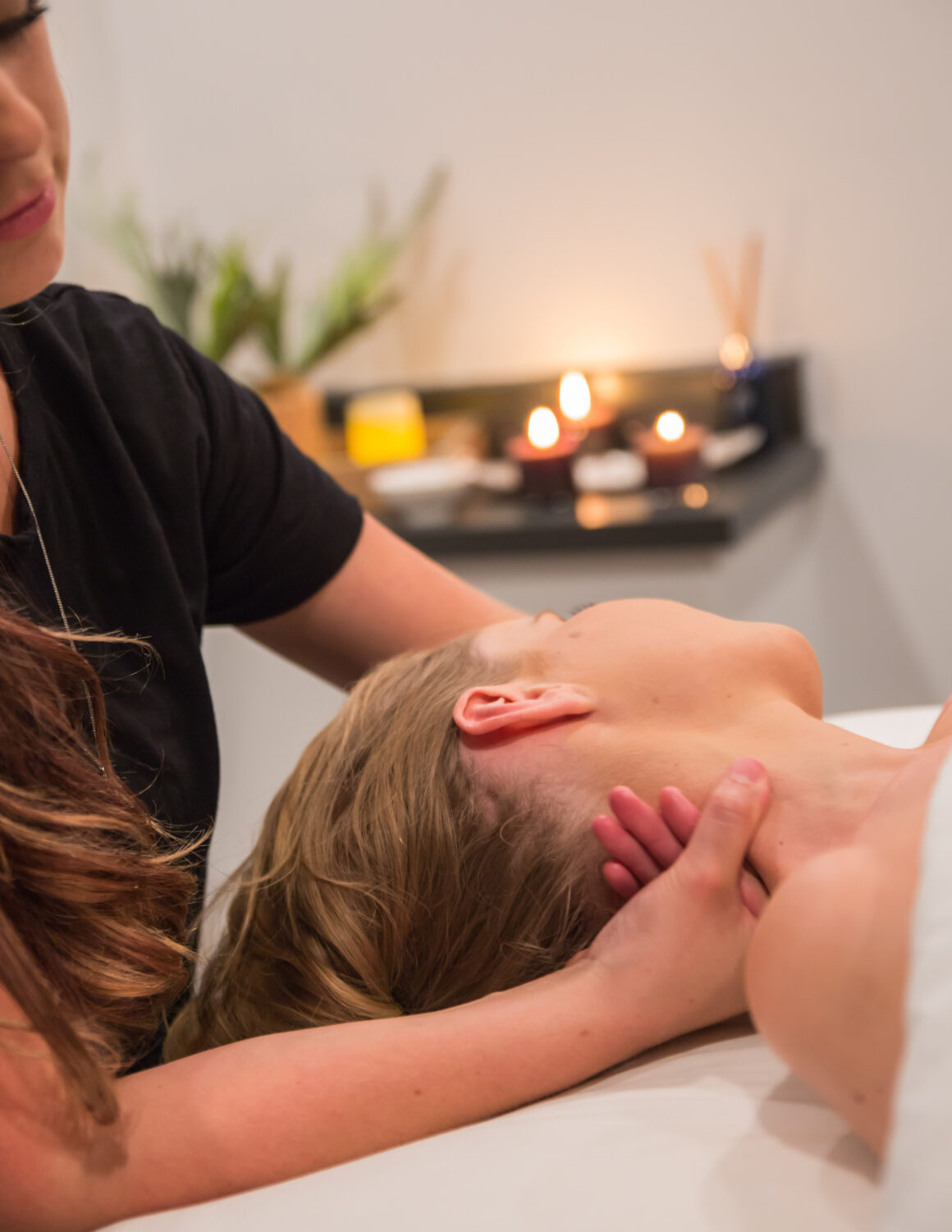
Massage therapy can be a wonderful tool for managing muscle tension, tenderness, and stress-related discomfort.
A skilled massage therapist doesn’t simply search for the sorest spot and push as hard as possible.
Instead, they consider how the surrounding muscles may be contributing to your discomfort.
For example, that knot near your shoulder blade may involve tension in your:
- Upper trapezius
- Levator scapulae
- Rhomboids
- Muscles surrounding your neck and shoulders
Your therapist may work on several areas rather than focusing exclusively on the one spot that’s bothering you.
Massage may help reduce pain sensitivity, ease muscle tension, encourage relaxation, and improve your comfort with movement.
And sometimes, that’s exactly what your body needs.
But Doesn’t Deep Tissue Massage Work Better?
Not necessarily.
This is one of the biggest misconceptions we hear about massage.
Some people believe that if a massage doesn’t hurt, it isn’t working.
But more pressure doesn’t automatically mean better results.
In fact, excessively deep pressure can leave already sensitive muscles feeling even more irritated.
A good massage should be tailored to your comfort level, the condition of your muscles, and your individual goals.
Sometimes deeper pressure feels wonderful.
Other times, slower, more moderate pressure is exactly what your body responds to best.
The goal isn’t to see how much pressure you can tolerate.
The goal is to help you feel better.
Why Does the Knot Come Back Even After a Great Massage?
This is the million-dollar question.
You leave your massage feeling lighter.
Your shoulders finally relax.
You can turn your head without that familiar pulling sensation.
Then a few days later, you notice the tension creeping back.
Does that mean your massage didn’t work?
Not at all.
Massage can provide meaningful relief, but it doesn’t automatically change the habits or physical demands that contributed to your discomfort.
If you’re still spending long hours at a computer, carrying tension during stressful days, or sleeping in an uncomfortable position, your muscles may become irritated again.
That’s why we often encourage clients to think of massage as one part of their overall wellness routine, rather than a one-time fix.
Gentle movement, strengthening exercises, ergonomic adjustments, stress management, and regular massage can all play a role.
For recurring discomfort, our massage therapists can help identify contributing factors.
How Often Should You Get a Massage for Shoulder Tension?
There’s no magic number.
Some people find that a monthly massage helps them manage everyday stress and muscle tension.
Others benefit from more frequent sessions for a period of time, depending on their needs and response to treatment.
And some simply book when they notice tension beginning to build.
At Urban Oasis Nashville, we believe your massage schedule should fit your body, your lifestyle, and your budget.
We’re not interested in convincing you that you need a massage every week.
We’re interested in helping you find what works for you.
When Is Shoulder Pain More Than Just a Muscle Knot?
Most everyday shoulder tension isn’t an emergency, but not every painful spot is a trigger point.
If your pain is persistent, worsening, or accompanied by numbness, tingling, weakness, or restricted movement, it’s important to have it evaluated by a healthcare professional.
Seek urgent medical attention for shoulder discomfort accompanied by chest pain, shortness of breath, or other symptoms of a possible cardiac emergency.
Massage can be helpful for many muscular complaints, but it isn’t a substitute for medical diagnosis or treatment.
Maybe It’s Time to Stop Ignoring That Shoulder Knot
Here’s what we’d love for you to take away from this.
You don’t have to wait until your shoulders are so tight that turning your head becomes uncomfortable.
You don’t have to accept constant tension as an unavoidable part of having a stressful job or busy life.
And you certainly don’t have to keep attacking that same sore spot with a massage gun, hoping this time it will finally disappear.
Sometimes your body is simply asking for a little attention.
At Urban Oasis Nashville, our experienced massage therapists customize each session to your individual needs, whether you’re dealing with stubborn shoulder tension, tight neck muscles, or simply need an hour to relax.
We’ll listen to what’s bothering you, discuss your pressure preferences, and focus on helping you feel more comfortable in your body.
Because your shoulders have probably been carrying enough lately.
Maybe it’s time to let someone take care of you for a change.
Ready to give those shoulders some attention?
Schedule your Oasis Massage at Urban Oasis Nashville and let us help you take the first step toward feeling more relaxed, comfortable, and refreshed.


